
If you’re a newly licensed professional engineer or replacing an older stamping tool, the language around seals and stamps can be confusing. In contrast, state boards may use “seal” when describing the official professional mark and different terminology when addressing how an engineer applies it.
Understanding the difference between a PE seal and a PE stamp starts with separating the official seal design from the tool or method that reproduces it on a document. Once you understand that distinction, it becomes easier to read your board’s requirements and determine which format suits the way you prepare engineering documents.
What Is a PE Seal?
A PE seal is the official design associated with a licensed professional engineer. Depending on the jurisdiction, the design may include the engineer’s name and license number, along with language identifying the profession or licensing state.
Each state engineering board sets requirements for its professional seals, which may cover the design, dimensions, and acceptable methods of use. Because these specifications vary, we recommend checking the current requirements for every state where you hold a license.
The seal carries professional meaning beyond its appearance. When you sign and seal engineering documents under applicable state requirements, you take professional responsibility as defined by that jurisdiction. The obligations can vary according to the document and governing rules.
What Is a PE Stamp?
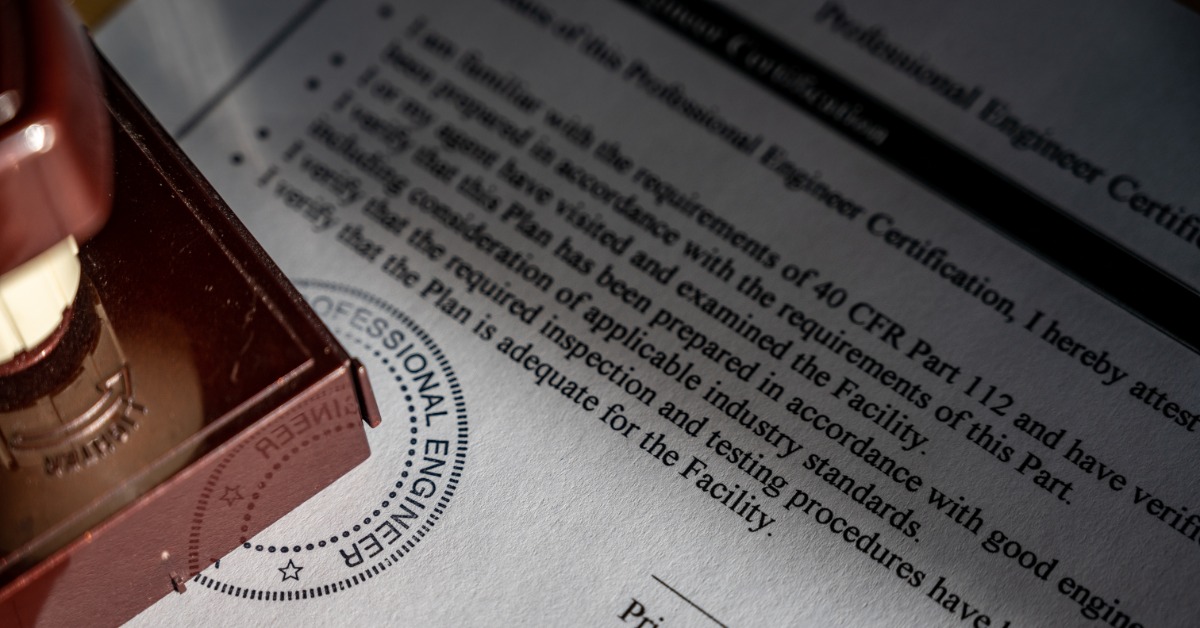
A PE stamp commonly refers to the physical rubber stamp that reproduces your approved seal design in ink. You’ll often hear engineers call this tool their “PE stamp,” even when their state board uses “seal” in its statutes or regulations.
The physical stamp gives you one way to place your seal design on a printed document. Depending on your state’s requirements, you may also use an embossing seal or an approved digital format.
Because terminology varies among boards, we don’t recommend relying on the words “stamp” and “seal” alone when deciding what you need. The specifications and permitted methods in your jurisdiction provide a much clearer answer.
What’s the Main Difference Between a PE Seal and PE Stamp?
The easiest way to understand the distinction is to consider the seal as the professional design associated with your license and the stamp as one tool that reproduces that design. In ordinary conversation, however, engineers and licensing authorities may use the terms differently.
The difference between a PE seal and PE stamp becomes especially relevant when you review state requirements or prepare documents for submission. One jurisdiction may refer primarily to a “seal,” while another may use “seal or stamp” in its governing language.
When you’re ordering a new stamp or preparing documents for submission, check the terminology alongside the actual design and usage requirements. Your state board’s current rules should guide the format you use.

What Information Appears on a PE Seal?
PE seal designs vary by jurisdiction, although they commonly identify the professional engineer and the license associated with the work. State boards may specify the wording, dimensions, or other design details that appear within the seal.
Accuracy matters here. A seal from one state may look similar to another state’s design but still contain differences that affect compliance with board specifications.
When reviewing the requirements for your seal, check details such as:
- Required wording and professional designation
- Licensee name and license number
- Seal dimensions and design specifications
- Signature and date requirements
We recommend reviewing the current board requirements for the license in question instead of using another engineer’s seal or an older design as your reference.
How Does a Physical PE Stamp Work?
A physical PE stamp transfers your seal design onto paper with ink. If your state and the receiving agency permit this format, you may use the stamp on printed plans, reports, and other professional documents that require your seal.
The stamping tool can come in several configurations, but the impression must still clearly reproduce the appropriate design. A crisp impression keeps the information legible, especially when documents are scanned or reproduced.
Before ordering or using engineering stamps and seals, check the current requirements for the state connected with your license. If you hold licenses in several jurisdictions, you’ll want the appropriate seal design for each one.
Where Do Embossing Seals Fit?
An embossing seal presses the professional seal design into paper and leaves a raised impression rather than an inked image. Some state boards allow engineers to use embossers as a physical method of applying their professional seals.
An embosser can work well with original paper documents, but you’ll also want to consider how the receiving agency handles those documents. A raised impression may lose clarity when someone scans or reproduces the page, and an agency may have separate submission requirements.
Before using an embosser, review your board’s rules and the receiving agency’s instructions. Doing both can help you choose a format that meets professional requirements and fits the submission process.
How Do Digital PE Seals Work?
As permitting and document-review systems have moved online, digital seal files have become part of many engineers’ workflows. A digital seal reproduces the approved design electronically, allowing you to place the image within an electronic document instead of applying an inked or embossed impression to paper.
It’s important to distinguish a digital seal image from a digital signature. Depending on the jurisdiction, placing your seal image in a PDF may not satisfy the requirements for digitally signing and sealing an engineering document.
Some boards set separate rules for electronic signatures, document authentication, and post-signing changes. If you submit engineering documents electronically, review your licensing board’s requirements along with the instructions from the agency receiving the files.
Why Do PE Seal Requirements Vary by State?
Professional engineers receive licenses through individual licensing jurisdictions, which means seal requirements aren’t uniform nationwide. If you hold licenses in several states, you may need a different seal design for each jurisdiction.
Boards can set requirements for seal wording and dimensions, as well as how you use it on professional documents. Electronic submission requirements can also vary, especially when a jurisdiction regulates digital signatures separately from digital seal images.
For that reason, we don’t recommend using one state’s seal as a template for another. Small differences in layout or required wording can matter even when two seals look similar at first glance.
Which PE Seal Format Fits Your Work?
Start with your licensing board’s current requirements, and consider how you typically prepare and submit engineering documents. If you work primarily with printed plans, a physical stamp or embosser may fit your workflow. If you regularly submit electronic documents, you may also need a digital seal file that matches the required design.
Many engineers work across different submission processes, which can make access to multiple formats useful. You might use a physical stamp for a paper plan set and a digital seal for an electronic submission, provided each method follows the applicable requirements.
Whatever format you use, the professional seal still represents your engineering license. Understanding the difference between the seal design and how you apply it can make it easier to interpret board guidance, choose the right format, and prepare your documents with confidence.
When you’re ready for a new professional engineer stamp or seal, browse our state-specific options to find the format that works for your license and workflow. We create each design with accuracy and clear impressions in mind, giving you a dependable stamp for your professional documents.