
Architects rely on professional seals to identify documents under their professional responsibility. Yet the stamp itself can take several forms, and the right format often depends on how you prepare and submit your work.
Understanding the different types of professional architect stamps can help you choose a format that suits your workflow while following the rules that apply to your license.
From traditional rubber stamps to electronic files, each option serves a distinct purpose.
Why Architect Stamp Types Matter
An architect stamp represents your professional credentials on plans and other documents that require a seal. State architecture boards set requirements for seal design and use, so architects should check the rules in each jurisdiction where they practice.
The physical format can affect how easily you apply the seal during your regular work. An architect who handles printed plans may prefer a traditional stamp, while someone who submits documents electronically may rely more often on a digital stamp file.
Stamp format and legal acceptance aren’t always the same issue. A jurisdiction may allow several methods of applying a seal while setting separate requirements for signatures, dates, or electronic submissions.
Traditional Rubber Architect Stamps
A traditional rubber stamp remains a familiar choice for architects who work with paper documents. These stamps use a separate ink pad, giving you control over ink application and making it easy to replace the pad when it wears out.
Traditional rubber stamps generally come with a wood or plastic handle. Their simple construction makes them a straightforward choice for architects who don’t need to stamp large batches of documents every day.
The separate ink pad does add an extra step. For architects who stamp documents frequently, another format may offer a smoother workflow.
Self-Inking Architect Stamps
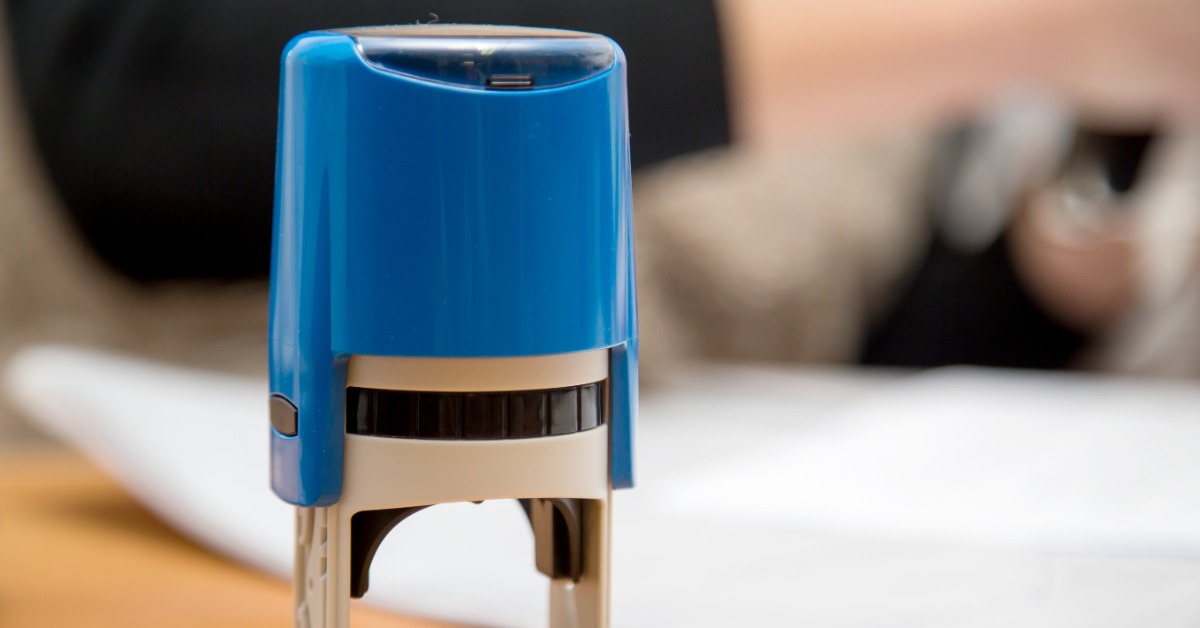
Self-inking stamps house the ink pad inside the stamp body. Each impression automatically re-inks the stamp, which can make repetitive stamping faster and cleaner.
This format works well in an office where architects regularly seal printed documents. The enclosed ink pad also makes storage easier because you don’t have to keep a separate pad nearby.
Architects should consider stamp size and available document space when selecting a self-inking model. The seal image still needs to match the design specifications that apply to the architect’s registration.

Pre-Inked Architect Stamps
Pre-inked stamps hold ink within the stamp material rather than using a separate internal ink pad. They can produce a sharp impression and offer a compact option for professional use.
The main difference between pre-inked and self-inking models comes down to their internal construction and stamping action. Both can work well for architects who want an all-in-one physical stamp.
Your preferred stamping frequency can help guide the choice. Consider how often you seal paper documents and where you’ll store the stamp when it’s not in use.
Pocket Stamps for Architects on the Move
Architects who split their time between an office and project locations may prefer a pocket stamp. Its compact size makes it easier to carry without taking up much room in a bag or case.
A pocket architectural stamp can also serve as a secondary physical stamp when your primary model stays at the office. That flexibility can help when your work regularly takes you away from your usual desk.
Portability doesn’t change the professional requirements connected with the seal. Before using any portable stamp on official documents, confirm that its impression follows your licensing board’s current specifications.
Architect Embossers
An embosser presses the seal design into paper, creating a raised impression rather than an inked image. Some architects prefer the appearance and tactile quality of an embossed seal for documents that accept this format.
Embossers come in desk and compact configurations. Desk models suit a fixed workspace, while smaller versions can make transport easier.
State rules determine whether an embossed impression meets applicable sealing requirements. Some boards permit several physical formats, while others specify how an architect must apply or reproduce the seal. Check the current rules before choosing an embosser as your primary sealing method.
Electronic Architect Stamp Files
Digital plan review has made electronic stamp files a common part of architectural workflows. These files reproduce the architect’s seal for placement on digital documents.
Electronic stamp files may come in formats such as PDF, JPEG, PNG, or AutoCAD DWG. The file format you use may depend on your software and document workflow.
An electronic stamp image alone doesn’t automatically satisfy every requirement for an electronically submitted document. A state or local authority may have separate rules governing electronic or digital signatures and how professionals secure submitted files.
Before submitting a digitally sealed document, architects should review:
- Their state architecture board’s current seal requirements
- The receiving agency’s electronic submission procedures
- Rules governing signatures or document authentication
- File-format requirements for the permitting system
That review helps separate the seal’s appearance from the rules governing its official use.
State-Specific Architect Seal Designs
Professional architect seals aren’t universal across the country. States can specify wording, dimensions, border details, registration information, or other design features.
That variation makes state-specific accuracy an important consideration when ordering a stamp. An architect licensed in multiple jurisdictions may need separate seals that correspond with each registration.
Check your state board’s current specifications before ordering or using a seal. Also review those requirements when you register in another state or change how you submit professional documents.
Choosing a Stamp Format for Your Workflow
When comparing professional architect stamp types, start with how you handle professional documents. Architects who work primarily with printed plans may favor a rubber, self-inking, or pre-inked format. Digital workflows may make electronic stamp files more useful.
You don’t necessarily need to limit yourself to one format when your jurisdiction permits multiple options. Some architects keep a physical stamp for paper documents and an electronic file for digital submissions.
Consider where you’ll use the stamp and how frequently you’ll need it. From there, confirm that the seal design matches the requirements of the state where you hold your registration.
Find an Architect Stamp That Fits Your Work
The right stamp format depends on your workflow and the rules that govern your license. Traditional rubber stamps offer a familiar option for paper plans, while self-inking and pre-inked versions can suit frequent use. Electronic files support digital submissions, and embossers offer another physical option where regulations allow.
Before ordering, check your state requirements and consider how you handle professional documents day-to-day. Choosing a format around those needs can give you a stamp that fits naturally into your architectural workflow.